Why it's not enough to just "take a break" (How coaches can prevent burnout)
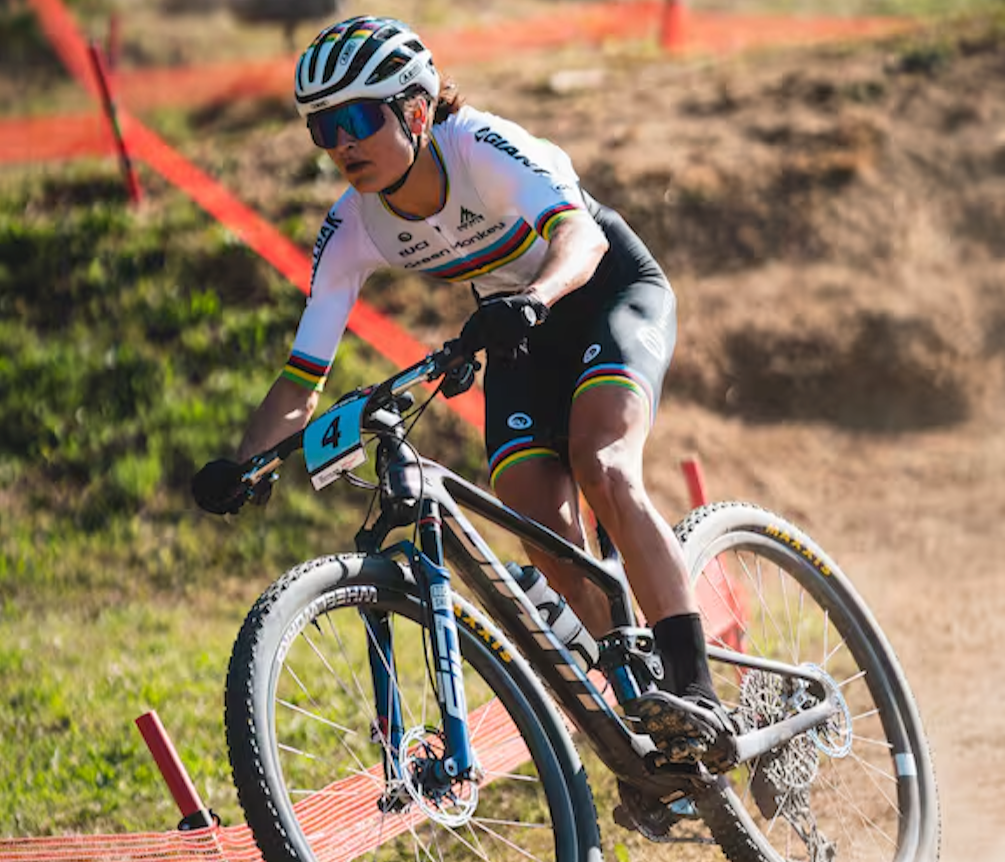
In Early 2026, Sammie Maxwell announced she wouldn't be defending her Mountain Bike World Series XCO title at all. The 22-year-old New Zealander won the overall (U23), then walked away for a full sabbatical year.
This decision is similar to the injury calls we wrote about near the end of last year, just on a different time scale.(Loïc Bruni's DNS at Mont-Sainte-Anne with a title on the line, and Tahnée Seagrave stepping out of the same weekend after weeks of pain)
This piece is about burnout. What it actually is, why stepping away is so psychologically hard, and how coaches can make the decision to pause a coachable skill rather than a crisis.
Take Sammie Maxwell for example; If world champions at the peak of their careers are learning to pull back, the riders and athletes we coach need the same skill.
Burnout Isn't Just Being Tired
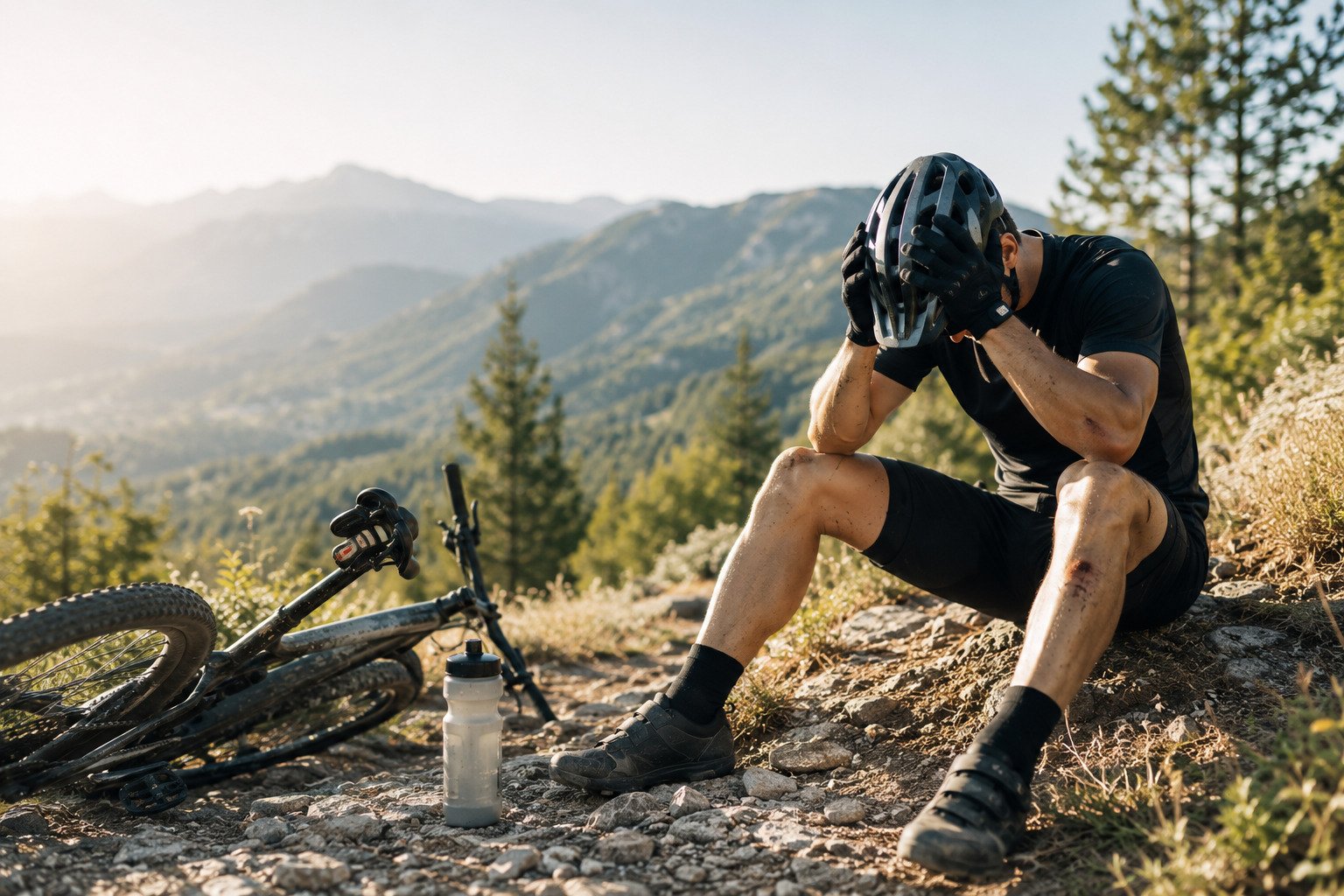
Every athlete is tired at the end of a season. Burnout is something more specific, and sport psychology has a reasonably tight definition of it. Thomas Raedeke's work describes athlete burnout as three things arriving together: physical and emotional exhaustion that rest doesn't fix, a growing sense of detachment from the sport (what researchers call devaluation, when the thing you loved starts feeling pointless), and a shrinking sense of accomplishment, where even wins stop landing.
This is also what separates burnout from a plateau or an ordinary rough patch. A rider in a rough patch still wants it, whereas a rider sliding toward burnout starts asking, quietly and often guiltily, why they're doing this at all.
Why Stopping Feels Impossible
If the fix were as simple as taking a break, nobody would burn out. The reason athletes ride it into the ground is that everything around them, and most of what's inside them, pushes the other way.
Sport runs on what researchers call a culture of risk, an environment that normalizes playing hurt and celebrates pushing through, whatever the cost. Grit and pain tolerance are treated as core virtues, and riders, learn to tune out warning signs that can lead to overdoing it.
“I’m really proud that I’m in a place where I can say I’m struggling and could call my coach... For me, the weeks where I’m able to say I’m struggling is when I’m doing well because it means I’m not ignoring those problems.”
Burnout is usually trained into an athlete before anyone notices it. The pressure to succeed turns every block into one that can't be missed, every result into proof of worth, and rest into something that has to be earned.
Athletes under that pressure learn to override their own signals, and the research shows how strong the effect is: the more external pressure an athlete feels from coaches and their own expectations, the longer they push past the warning signs, and the ones who do step back tend to do it only when someone has taken that pressure off. The lesson for coaches is blunt. Athletes make healthier decisions when someone they trust has made it safe to stop.
Loss aversion does the rest. People take irrational risks to avoid a certain loss, and to an athlete or rider who has built their identity on output, easing off is a certain loss: the result, the points, the training streak, the sense of being someone who never backs down. So they keep paying tomorrow's energy for today's numbers, which is exactly the trade that ends in burnout.
Maxwell's sabbatical is that trade run in reverse: a year of results surrendered now, in exchange for a healthy career that still exists in 2028.
Motivation Is the Foundation
This is where coaching comes in, because burnout is not random. It tracks the slow erosion of the thing we treat as the foundation of our Mental Skills Pyramid: motivation and purpose.
We build motivation at the base of that pyramid deliberately. Following the self-determination research of Deci and Ryan, we teach that intrinsic motivation, riding for enjoyment, personal challenge, and connection with the outdoors, is what sustains long-term engagement, and that it's the resource that lets riders push through discomfort, fatigue, and setbacks.
Extrinsic drivers, results, rankings, and approval, can power an athlete for a while, but they're exactly what hollows out the achievement. When the "why" underneath the work goes missing, no amount of structure on top of it holds.
Practically, this is why we coach the question "why do you ride?" as a real tool rather than a warm-up. A coach who knows what actually drives each rider can see when that drive is fading, and a fading “why” is the earliest burnout signal there is, showing up well before the exhaustion does.
What Coaches Can Do
The good news is that the coaching moves here are concrete, and most of them happen long before anyone is in trouble.
1. Make stopping safe before it's needed. The research is clear that athletes pull back appropriately when they feel little pressure to continue. That safety is built in the ordinary weeks: how you react to a skipped session, how you talk about other athletes who rest, whether "I'm cooked" is treated as information or as weakness.
2. Agree on the no-go signs in advance. Define together, ahead of time, what fatigue, pain, and flatness look like at the level where you pause, so the call is a checklist, not a feeling to be argued with.
3. Watch the why, not just the legs. Check in on enjoyment and purpose as routinely as you check technique. Flat affect on wins, dread before sessions that used to be the highlight of the week, and a rider who keeps training hard but has stopped talking about what they're excited for are motivation signals, and they arrive early.
4. Treat recovery as part of the program. Rest, variety, and off-the-bike time are programming decisions, not the absence of programming. A season plan that never plans the pause is a plan that assumes burnout won't happen.
5. Frame the pull-back as a decision, not a failure. Self-compassion research in athletes links it to higher perceived performance, not softness. When a rider makes a smart call to sit out, treat it the way you'd treat a smart line choice. The story they tell themselves about the decision determines how they come back from it.
Key Takeaway
Burnout is not a character flaw and not ordinary tiredness; it's exhaustion, detachment, and vanishing satisfaction arriving together, and it grows in the gap between what drives an athlete and what their schedule demands. The riders who navigate it well, from world champions to weekend racers, are the ones with someone in their corner who made pulling back a legitimate option before it became the only one.
That someone is often a coach.
Take It Further
Want access to our Masterclass on Preventing Burnout and Plateaus?Train members get access, and EVOLVE members have masterclasses included in their plan.
Find out more @ gsmbc.pro/membership-benefits
Sources
Maxwell sabbatical: UCI Mountain Bike World Series announcement; Pinkbike
Bruni and Seagrave, Mont-Sainte-Anne 2025: Canadian Cycling Magazine
Athlete burnout dimensions: Raedeke & Smith, Athlete Burnout Questionnaire
Culture of risk and injury decision-making: Mayer et al. (2020), Frontiers in Psychology
Self-compassion and performance: Killham et al. (2018), Sport, Exercise, & Performance Psychology
Intrinsic motivation: Deci & Ryan, Self-Determination Theory