ESSENTIALS: How to Shift Gears on a Mountain Bike
This is part of GSMBC Essentials, a series answering the questions riders ask most often online. Each entry takes a common topic, breaks it down in plain language, and gives you a clear, practical reference you can put to use the next time you ride. Built on coaching fundamentals. Written for anyone with a bike.
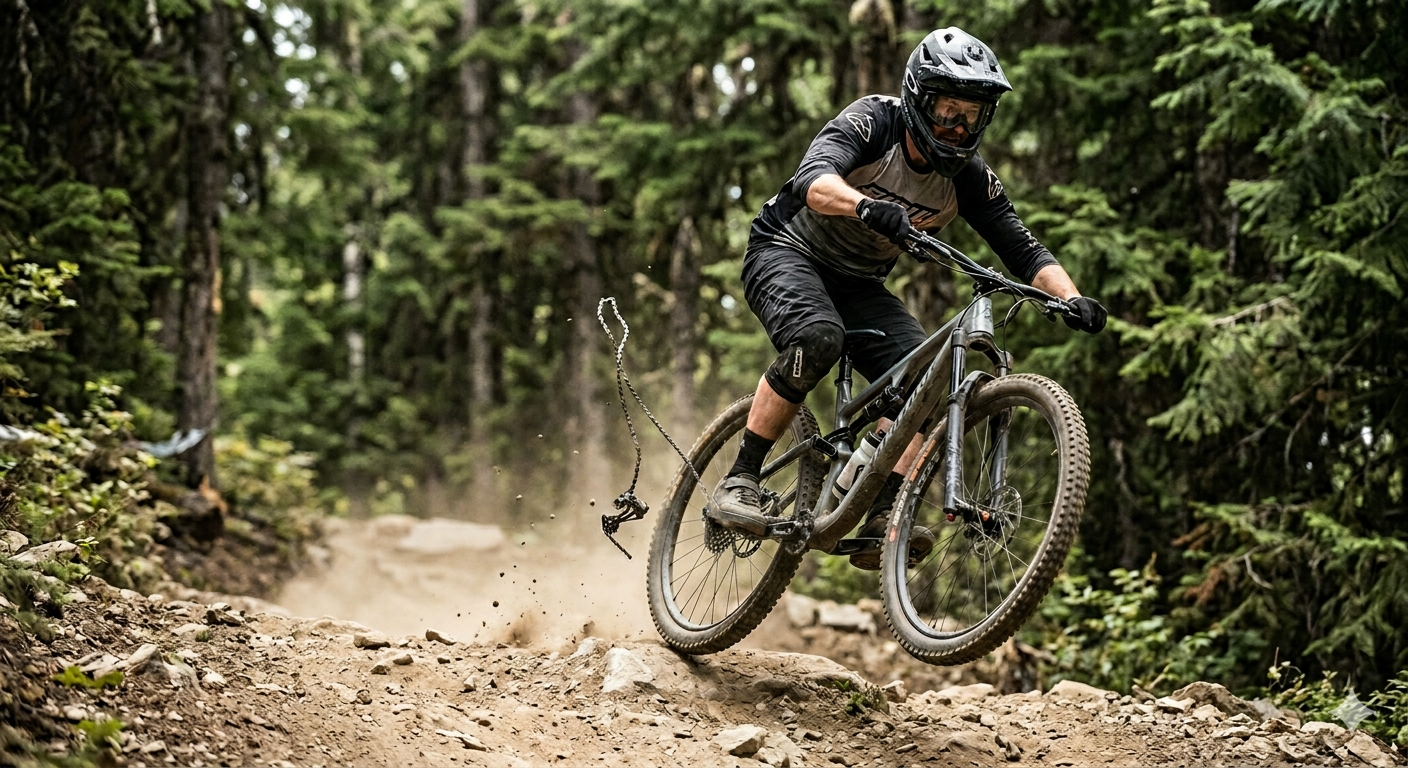
Gears are usually one of the first skills a beginner mountain biker learns, and the last thing most riders ever get coached on. The shifter itself takes a few minutes to figure out. What almost nobody gets taught is the decision-making underneath it: which gear, at what moment, and why. That gap shows up later as crunched shifts on climbs, stalled legs on punchy pitches, and a vague sense that the bike is working against you.
This guide covers how to use the gears on a mountain bike: what they're actually for, the trade-offs behind every shift decision, and the simple technique that makes gear changes smooth and silent. At the end there's a four-drill practice plan you can run on any trail you already know.
Gears Exist to Manage Your Cadence
A gear is a ratio between the chainring at the front and whichever rear cog the chain is sitting on. A bigger rear cog feels easier and moves you slower; a smaller one feels harder and moves you faster. On almost every modern mountain bike a single right-hand shifter controls the whole range, so the mechanical side really is that simple.
What the gears are managing is yourcadence, the speed your legs turn the pedals.
We coach cadence as a window, roughly 60 to 90 revolutions per minute, and the job of shifting is to keep your legs inside that window as the trail changes underneath you.
A car engine is the comparison we use in our courses: rev it too slowly and it stalls, rev it too fast and it stops accelerating and burns fuel. The driver changes gear to keep the engine in its efficient range, and a rider does exactly the same thing with their legs. Inside that window your legs aren't grinding against a gear that's too hard or spinning uselessly against one that's too easy, which is most of what efficiency means on a bike.)
Three things will push your cadence out of its window and prompt a shift: your speed, the terrain, and your own physical state. The first two are more obvious once you start watching for them. The third one matters more than riders expect, because the gear that works on a climb when you're fresh is often a gear too hard for the same climb three hours in.
Every Shift Is a Trade-Off
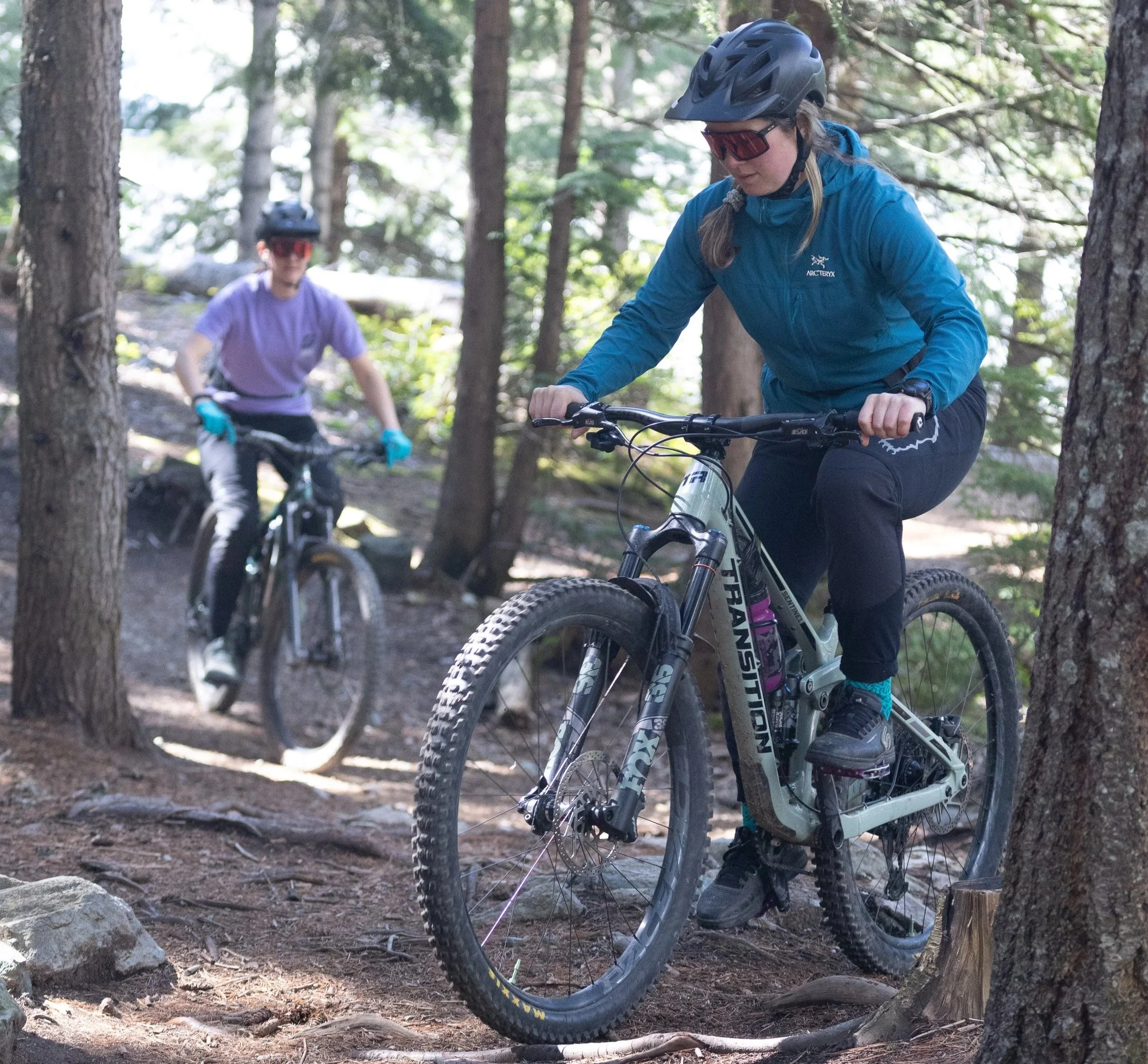
Here's where the tactics come in - Take a short, punchy climb in the middle of a flowing trail. You have two options, and both are valid.
Option one: shift into an easier gear and protect your cadence. Your legs stay in their window and the pedalling stays light, but the bike inevitably slows, and once it has slowed you'll be relying on that easier gear to grind out the rest of the climb.
Option two: hold your gear and let the cadence dip. Your legs work harder for a few strokes and the pedal pressure climbs noticeably, but the bike carries its momentum into the slope.
Neither of these is the correct answer, because the correct answer depends on the length of the climb, the speed you're carrying, and how much your legs have left, this is why we coach the 60 to 90 window as a range rather than a target number.
Letting your cadence vary between the two ends of the window is precisely what lets you balance cadence against momentum, and choosing between those two options, over and over, terrain feature by terrain feature, is what skilled gear use actually is.
The Technique: Shift Light

However good your decisions are, the shift itself only goes smoothly under one condition: minimal pedal pressure at the moment you click. The derailleur has to physically move the chain sideways from one cog to another, and the harder you're driving the pedals, the more tension is locking that chain in place.
Ease the tension and it slides across with no drama.
In practice this means timing your shift for a moment of lightness. Keep the pedals turning, soften the pressure for half a stroke as you click, then carry on. The shift happens silently, the chain stays where you put it (and your drivetrain lasts a great deal longer). The crunch you hear when you shift under full load is the sound of this technique missing, and it's the single most common gear fault we see in students at every level.
Two supporting details are worth knowing.
First, bike setup matters; a poorly adjusted drivetrain will shift badly no matter how good your technique is, and indexing is a quick, cheap job at any shop.
Second, if you ride an older bike with two or three front chainrings, aim to keep the chain line as straight as possible from front to rear, since extreme combinations (biggest to biggest, smallest to smallest) stress the chain sideways and shift poorly. On a modern 1x drivetrain this mostly takes care of itself.
Coach's Note
Gears sit inside what we call the Controls skill, alongside braking, and there's a reason we treat them as foundational: a rider who can't select the right gear is fighting their bike for the whole ride, and that fight leaks into everything else. Watch a strong rider on rolling terrain and the shifts are nearly invisible, a click here and there in moments of light pedal pressure, cadence never far from the middle of its window.
It's a feedback loop, pressure in the feet prompting small decisions, repeated until the decisions become habits.
Key Takeaway
Your gears have one job: keeping your cadence in a window your legs can sustain, somewhere around 60 to 90rpm.
Every shift is a trade-off between cadence and momentum, and the pressure in your feet tells you when that trade-off is due. Make the shift itself in a moment of light pedalling and the whole system runs silent.
The Drill Progression
1. Calibrate the CADENCE window. On a flat stretch of trail or road, spend five minutes finding what 60rpm and 90rpm actually feel like (count pedal strokes for 15 seconds and multiply by four; 15 to 22 strokes puts you in the window). Most riders have never put numbers on their cadence, and the whole skill rests on knowing what the edges of the window feel like in your legs.
2. Silent shifting. Still on easy ground, make ten deliberate shifts, softening your pedal pressure for half a stroke at each click. You're listening for silence… or at least trying to avoid the nasty ‘crunch’ when the chain tries to move between cogs with too much pressure. Once you can reliably hear the difference between a shift made under load and a shift made light, the technique starts transferring to the trail on its own.
3. Read the three factors. Ride a trail you know well and, before every terrain change you can see coming, name which factor is about to move your cadence: speed, terrain, or your own legs. Then shift while the pedalling is still light. You're training your eyes and your thumb to act before the cadence collapses rather than after.
4. The short-climb experiment. Pick one short, punchy climb and ride it both ways. First lap, shift easier early and protect your cadence. Second lap, hold the gear and let momentum carry you. Notice where each option costs you and where it pays. There's no right answer here; the point is to feel the trade-off clearly enough that you can choose deliberately next time the trail asks the question.
Frequently Asked Questions
Should I shift before or during a climb? Shifts go through cleanly when the chain is under light pressure, and on a steep climb there's rarely a light moment, so the reliable window is before the gradient bites. That said, holding your gear into a [short] climb and letting momentum do the work is sometimes the better option. The skill is choosing on purpose rather than discovering halfway up that the choice has been made for you.
How do I know which gear to be in? Once you figure out your cadence, roughly 60 to 90 pedal revolutions per minute for most riders. If the pedals feel heavy and your legs are grinding, shift easier. If you're spinning fast with no resistance, shift harder. With practice you stop counting and start feeling when the cadence drifts out of its window.
Why does my chain crunch when I shift? Almost always because there's too much pedal pressure on the chain at the moment you click. Soften your pedalling for half a stroke as you shift and the chain moves across quietly. If it still crunches after that, the drivetrain likely needs adjustment, which is a quick job at any bike shop.
Does any of this change on a bike with two or three front chainrings? The cadence window and the light-pressure technique stay the same. The one extra consideration is chain line: try to keep the chain running as straight as possible from front to rear, because crossed-over combinations stress the chain and shift poorly. Modern 1x drivetrains have made this a non-issue, which is part of why they took over.
Take It Further
Gear use is part of the Controls skill, one of the six riding skills in our framework, and the same decision-making thread runs through all of them.
A free GSMBC Membership gives riders and coaches access to our reference guide, webinars, and the coaching frameworks we publish. If you want to take this further, our courses cover the rest of the six skills in the same level of detail, starting with the Intro Coach Course. Begin with the membership at https://gsmbc.pro/member-benefits, or look at the course schedule at https://gsmbc.pro.